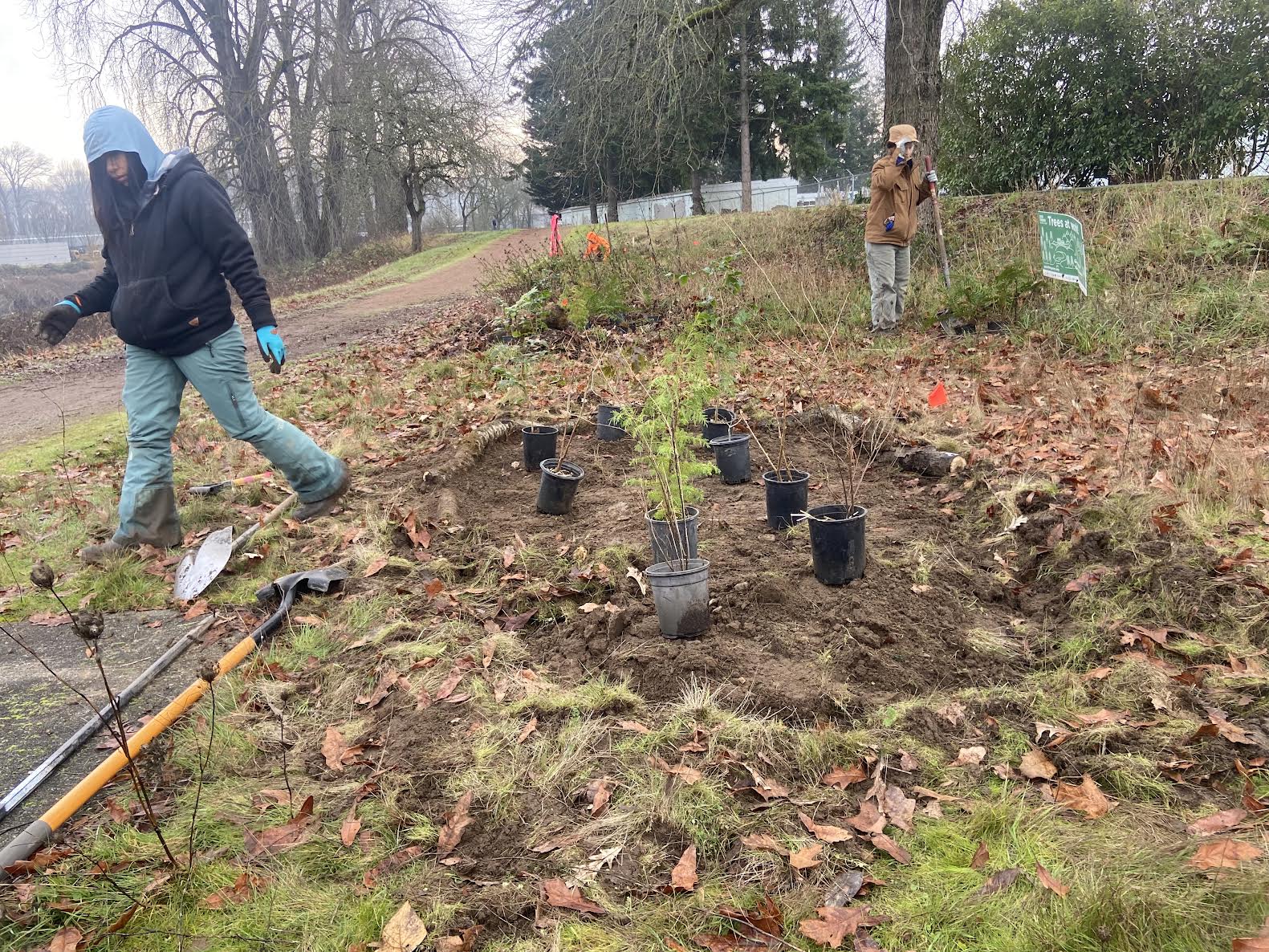
At River Mile 14 on the lower Green River in Tukwila a levee stands with its exposed profile of grasses, yarrow Achillea millefolium, and one mature pin oak. As a federally-insured levee it has been built of compacted sand/gravels for engineering purposes not for large woody plants. Other detriments for riparian restoration here include high sun aspect, trail & parking lot pavement (urban heat island), and no irrigation system.
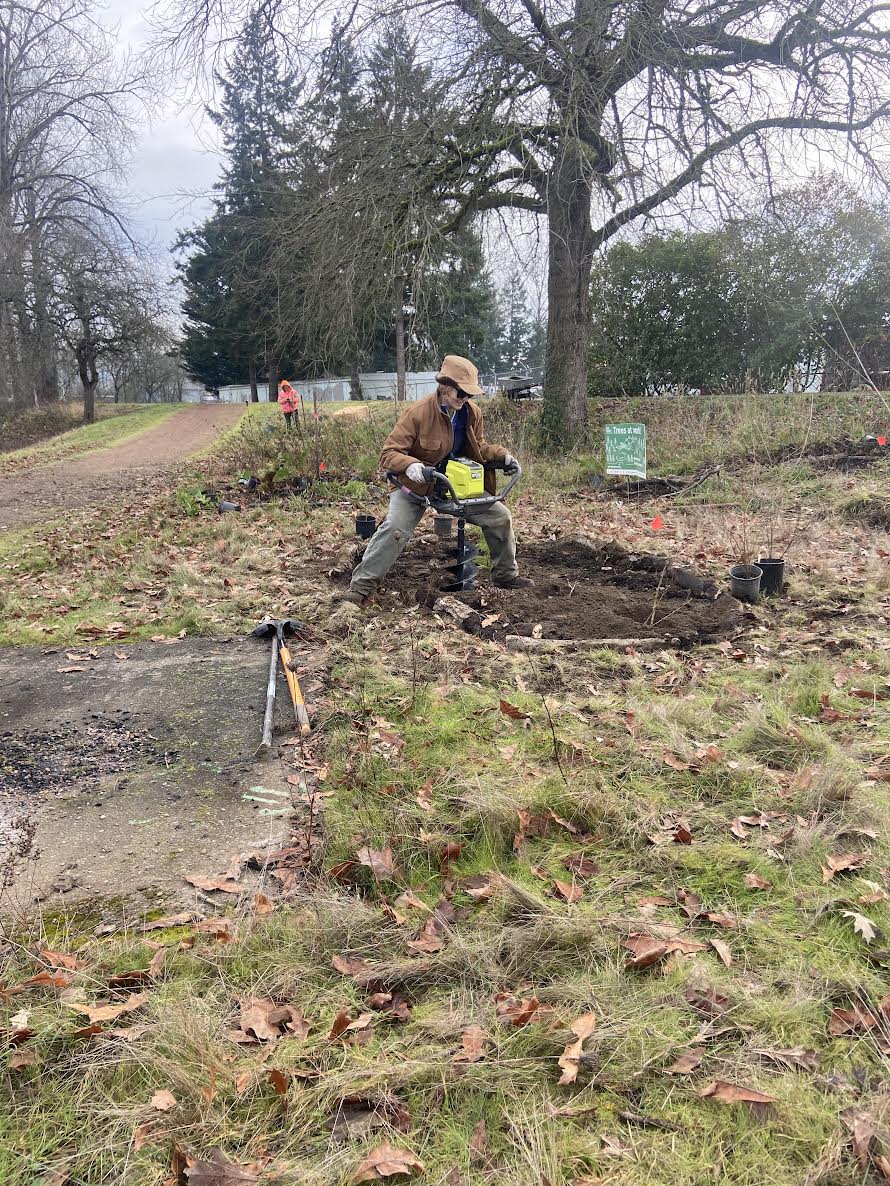
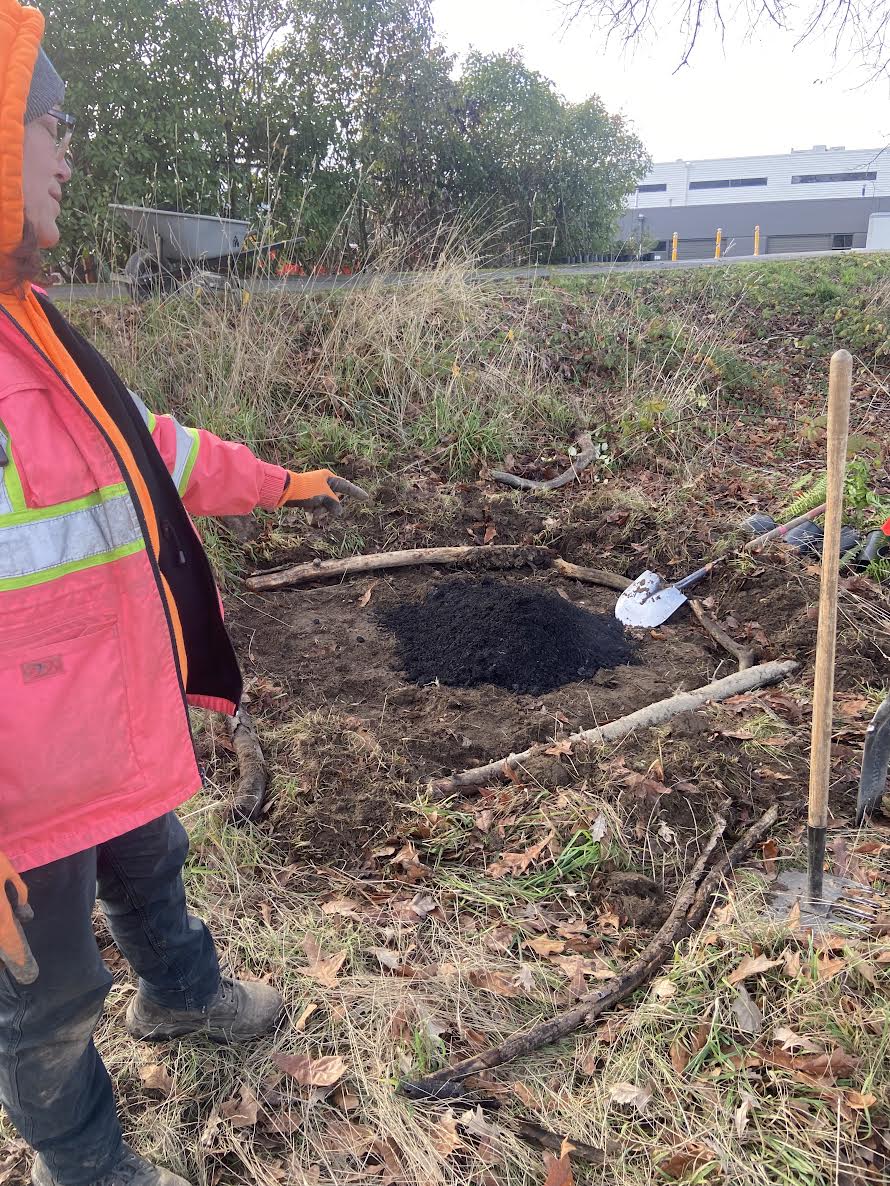
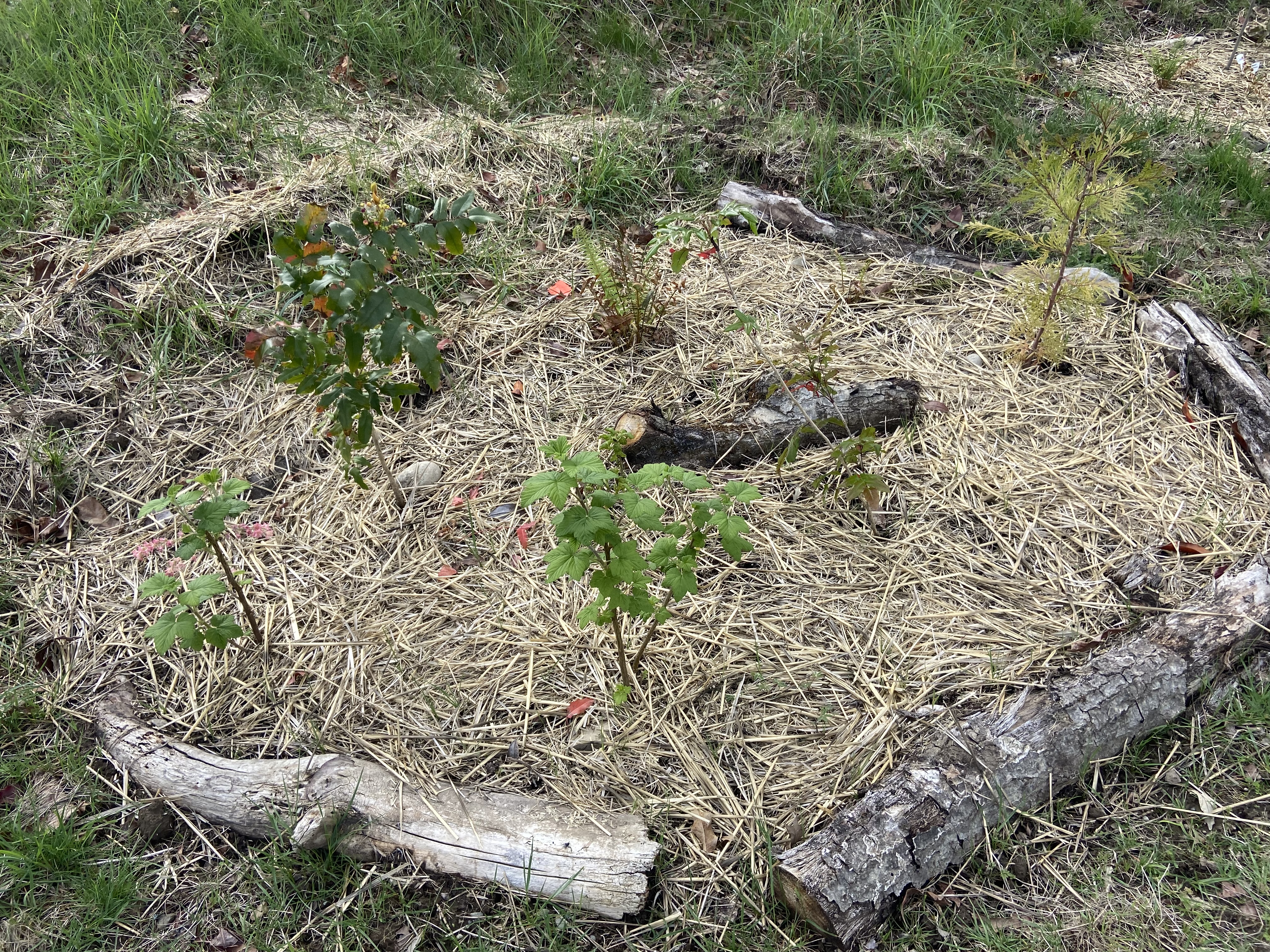
Bringing out an excavator would require permitting, time, expense and more restrictions so we dropped the heavy machinery and augered our holes. For our cluster plantings, I wanted to know if we applied fresh compost and straw would this give better results for seedlings than our usual 4″ arbor chip mulch. My thinking was that the fine textured, microbially active compost with strong nitrogen inputs and straw with relatively fast decomposition of it’s carbon fibers would keep soils loose, enhance richness, and retain soil moisture. I also wanted to plant river lupine seed and other wildflower mixes. Our initial results by September showed more than 50% survival on those cluster plantings that escaped a late summer arson fire. Four irrigation trips to hand water pulled our plants through the summer. Our soils maintained their loose texture and our plants look healthy. In year two we will begin tours of this project for our clients.